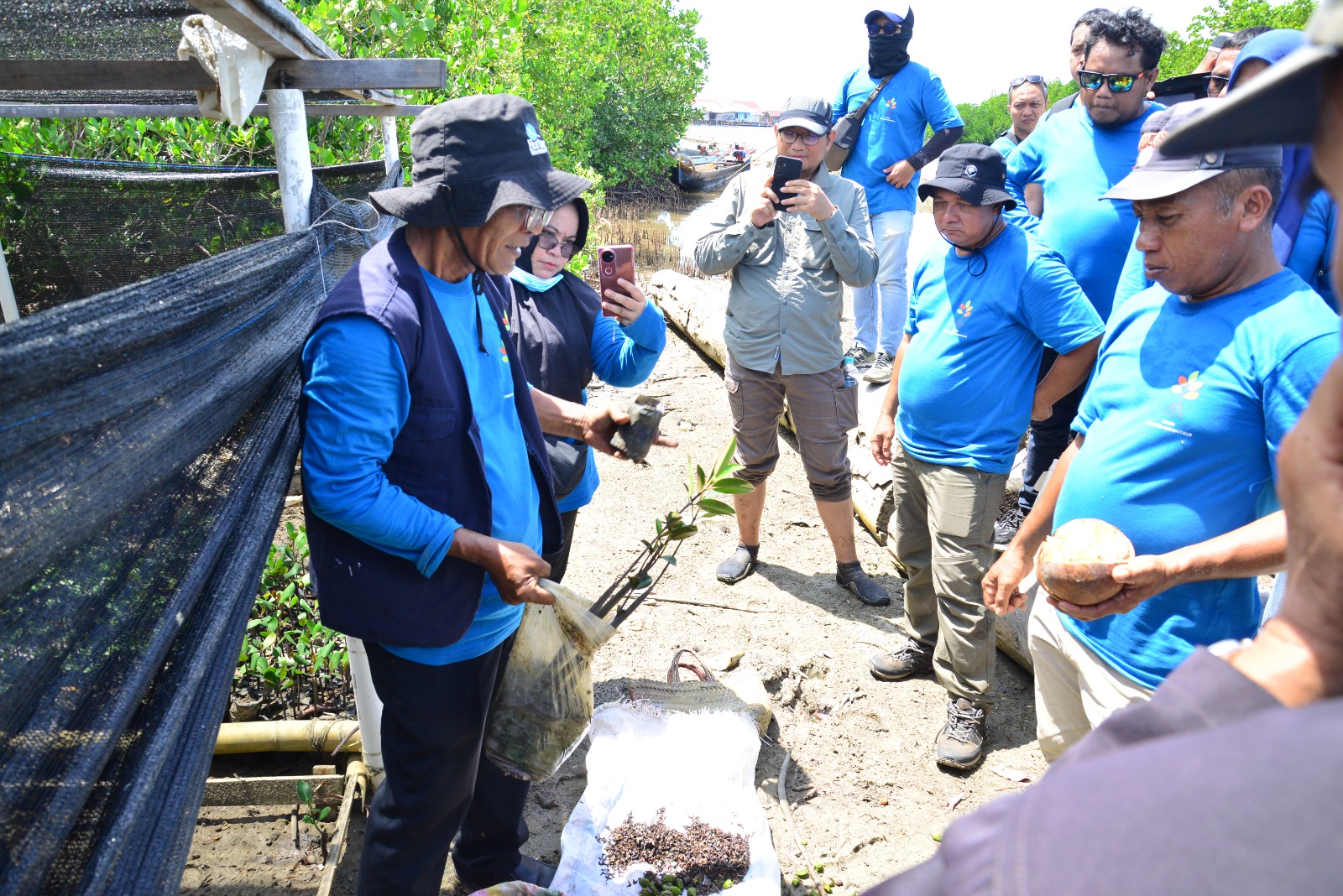
Pohuwato Regency, Kominfotik — Efforts to strengthen the mangrove ecosystem while increasing the income of coastal communities were promoted through the capacity building activities of the Gorontalo Regional Mangrove Working Group (KKMD) held in Torosiaje Village, Popayato District, Thursday (4/12/2025). This training focused on improving skills in nursery techniques and utilizing mangroves as an economic resource.
The training also focused on introducing various mangrove species, nursery techniques, and the utilization of non-timber forest products. Participants were also introduced to the economic opportunities derived from mangrove-based products currently managed by coastal women’s groups.
Chairman of KSL Paddakaung Torosiaje Jaya, Umar Pasandre, acting as the speaker, explained that several economically valuable mangrove species are still very limited in Gorontalo. Species such as Avicennia, Sonneratia, Bruguiera gymnorhiza, and Xylocarpus only constitute around 10–20 percent of the total population in the field.
He stated that the fruits of these species can be processed into various products such as juice, jam, flour, snack sticks, soap, and even cosmetics. These products represent business opportunities continually being developed by women’s groups in the coastal areas.
Umar observed that mangrove restoration efforts have tended to focus on common species that are easy to find. This condition makes it difficult for the community to obtain the fruits of high-economic-value species needed for processed product production.
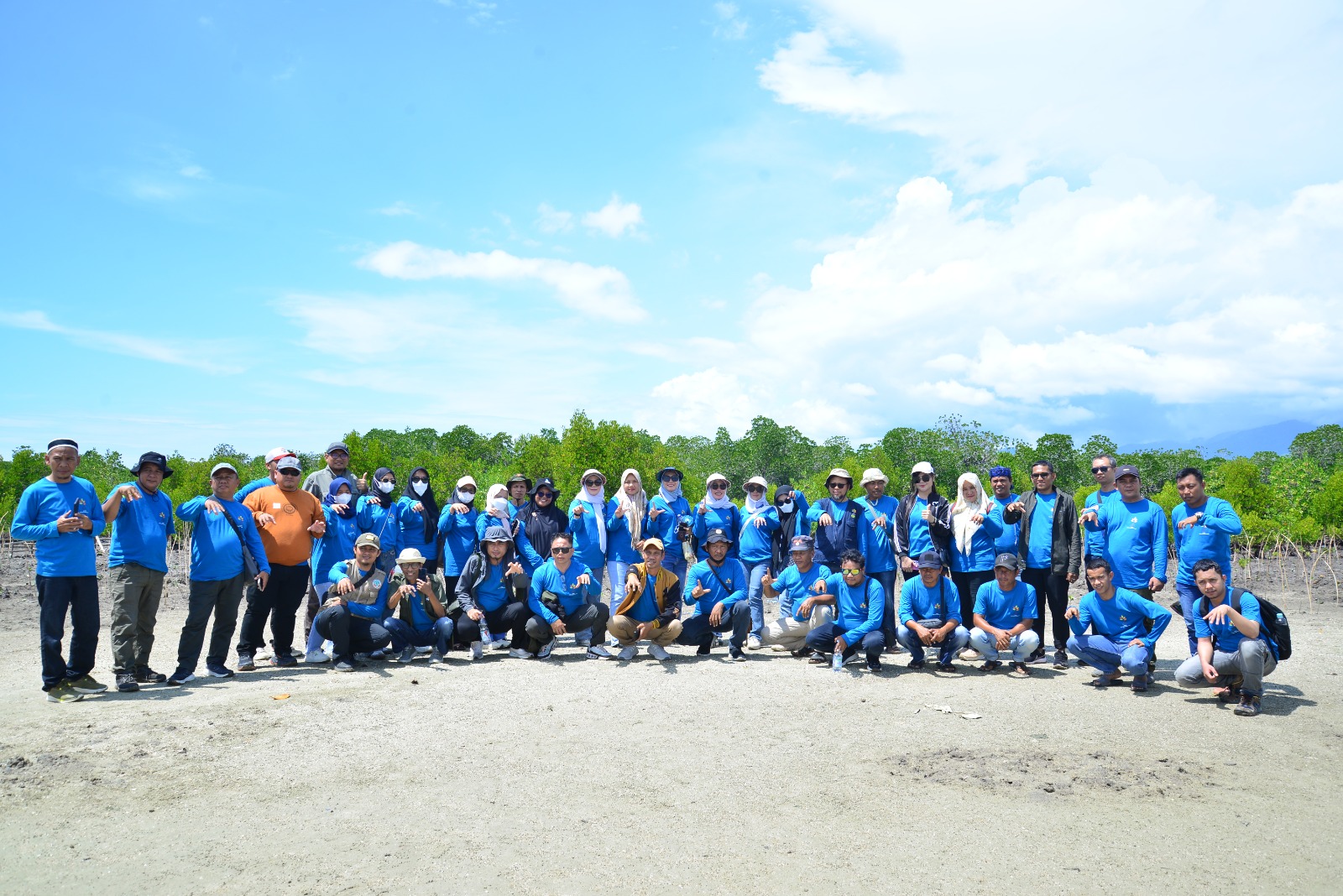
Meanwhile, the Head of the River Basin Strengthening Institution Section, Waode Waridawaty Igret, said that Pohuwato was chosen as the location for the activity because it has a diverse mangrove vegetation that can serve as an example for other districts. The region is deemed suitable as a field learning site for the mangrove working group.
She hopes that this training can be implemented in their respective regions so that the benefits do not stop with just one activity. According to her, strengthening the capacity of mangrove groups will reinforce the ecosystem while opening up new economic opportunities for coastal residents.
Through this training, participants practiced selecting fruits ready for sowing, preparing planting media, and caring for seedlings according to the characteristics of each species. They also learned the ideal location for planting based on habitat conditions.
To date, the Torosiaje nursery location has sowed approximately 900 seedlings that will be planted in a three-hectare rehabilitation area in Bumi Bahari Village. This land has been managed by the community, village government, and women’s groups since 2012.
Reporter: Mila
Translated by Fera